It is the policy of Cabot Learning Federation (CLF) to conduct its operations in such a manner as to ensure the health, safety, and welfare of all its employees, contractors, clients, students, general public and others whilst working and studying on its premises and outside those premises on associated activities. Working to the Health & Safety at Work etc. Act 1974 and UK Statutory Instruments, as well as any future national health and safety legislation including
• Workplace (Health, Safety and Welfare) Regulations 1992 • The Management of Health and Safety at Work Regulations 1999
• The Control of Substances Hazardous to Health Regulations 2002
• The Reporting of Injuries, Diseases and Dangerous Occurrences Regulations (RIDDOR) 2013,
• The Health and Safety (Display Screen Equipment) Regulations 1992
• The Gas Safety (Installation and Use) Regulations 1998
• The Regulatory Reform (Fire Safety) Order 2005
• The Work at Height Regulations 2005
• Control of Asbestos Regulations 2012
• The Ionising Radiations Regulations 2017
We will achieve this by:
Whilst the day-to-day management of health and safety can be delegated to the academies, the ultimate and overall responsibility for ensuring a safe and healthy environment lies with the CLF Board.
Specific Health and Safety Policies of each CLF academy or school must integrate into this CLF Health and Safety Policy.
John Cabot Ventures Ltd and City Academy Trading Ltd will come under the CLF Health and Safety Policy and operational issues will be dealt with under CLF Policy via contract management procedures and Local Academy policy.
The CLF Board, Sub-committees, Executive Team, Principals and Senior Leadership Teams, Academy Councils, CLF staff, volunteers, and employees of associated or subsidiary companies must familiarise themselves with the contents of this statement, the organisational structure and arrangements.
Employees have a legal duty to act in a safe manner and not to endanger themselves or others by their actions. Staff are encouraged to be proactive in developing and maintaining a healthy and safe working environment and to report health and safety concerns to the appropriate line management, or through the appropriate reporting procedures.
The CLF Board recognises a positive health and safety culture is of significant benefit to the good performance and safety of the whole organisation. We aim to encourage, support and develop a positive and proactive approach for students through risk education and awareness. The organisational structure named below will ensure that sufficient resources (including financial) are available so that the Policy and its arrangements can be implemented effectively.
This Policy and our health and safety standards will be under continual review in the interests of continuous improvement. Formal amendment to this Policy will be conducted annually or as necessary to reflect changes in the academies strategy, UK or EU law and any changes will be brought to the attention of all staff.
Steve Taylor, Chief Executive Officer, Cabot Learning Federation#
Paul Olomolaiye, Chair of the Cabot Learning Federation Trust
An Equalities Impact Assessment has been carried out. The assessment concluded that there was no adverse impact identified for any groups of people with protected characteristics. The full Equalities Impact Assessment Report can be obtained from James Lewington
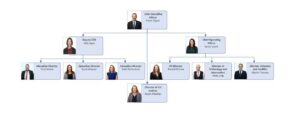
Cabot Learning Federation recognises the need to identify organisational methods for implementing and managing the health and safety of all persons who work within CLF, each associated or subsidiary company, each CLF academy and anyone who visits their premises.
CLF understands the Health and Safety at Work etc. Act 1974 places ultimate and overall responsibility for health and safety with the CLF Board of Directors. This Policy directly relates to the CLF Board of Directors as a corporate body, the Audit Committee, People & Wellbeing Executive Group, Executive Team, and Central Services Team. The following is an outline of duties and responsibilities that have been assigned to these specific groups.
4.1 CLF Board of Directors
The Board of Directors, as a corporate body, has the responsibility to set the strategic direction and objectives of all health and safety matters across the CLF. The board is responsible for ensuring that high standards of corporate governance are maintained. It exercises its powers and functions by addressing such matters as policy and strategic development, adopting an annual plan and budget, monitoring the CLF safety management systems, managing the corporate risk register, and making strategic decisions about the direction of the CLF. The overall aim is to ensure a positive health and safety culture is established and maintained throughout.
The Board must ensure that all reasonable steps have been taken to reduce the possibility of accident or injury to staff, students, and visitors. CLF Sub-committees, the Executive Team, Principals and Senior leadership teams, Academy Councils and any relevant Project Steering Group will keep the Board informed of all developments relating to health and safety matters and will include such matters in a health and safety report. The CLF Board of Trustees responsibilities are:
4.2 Audit Committee
The Audit Committee must:
• Review the CLF risk management practices and procedures and ensure appropriate action plans are in place.
• Ensure progress of internal and external audits.
4.3 Operations Committee
The Operations Committee are responsible for health and safety and must:
4.4 Executive Team
The Executive Team must support the implementation of health and safety across the CLF by:
• Implementing and reviewing policies.
• Considering the impact of health and safety in all strategic and operational decision making.
• Implementing ways in reducing the likelihood of people being harmed by CLF activities.
• Appraising findings and appropriate actions from health and safety audits, compliance audits, inspection audits, Reporting of Injuries Disease and Dangerous Occurrences (RIDDOR) reports.
• Ensuring systems are in place and adhered to minimise the likelihood of enforcement action, penalties and prosecutions.
• Working alongside Principals to manage and monitor an informed, proportionate, and prioritised risk management system for the CLF, ensuring that all risk assessments are completed and reviewed in accordance with CLF Risk Assessment processes.
• Ensuring there is an emergency plan with procedures for the safe evacuation of a CLF premises.
• Be the point of contact for feedback and progression for the academies and academy health and safety Committees should any issues arise.
• Provide two-way feedback in monitoring and review of operational health and safety issues, and feedback from and to the academy health and safety committee.
• Monitoring the structure, attendance, schedule and agenda of the academy health and safety committee.
4.5 The Director of Estates and facilities
The Health and Safety and Estates Teams, working with the Director of Facilities and Estates must:
• Manage the Risk Management process across the CLF.
• Update and recommend for approval the CLF Health and Safety Policy and produce an academy level Policy for adoption by academies.
• Produce an annual health and safety strategic development plan.
• Provide expert advice and guidance to CLF staff regarding health and safety issues.
• Ensure arrangements are made for audits and other visits to take place in each academy.
• Review audit reports and ensure academies take sufficient action to ensure improvement.
• Review the status of health and safety across the CLF ensuring appropriate action is taken where areas of weakness or concern are identified.
• Undertake and feed into the Due Diligence process for new business opportunities.
• Lead the development and delivery of effective and robust health and safety processes and services across the CLF, including Risk Assessment processes.
• Support action as required following any health and safety incident.
• Implement an effective accident reporting and investigation procedure across the CLF.
• Ensure all relevant internal and external stakeholders are involved/participate in key health and safety activities and processes to ensure the development of robust and appropriate systems.
• Maintain the central health and safety records and use them to inform the audit programme.
• Arrange statutory training in health and safety matters.
• Create and publish health and safety related communications through news items to support the knowledge and skills of staff with health and safety responsibilities across the organisation.
• Engage specialist advisors when required and work with them on specialist activities such as asbestos, fire risk assessments etc.
• Oversee the process for contractor selection via Pre-Qualification Questionnaire (PQQ).
• Oversee the mechanical and electrical statutory compliance contract, Catering and Cleaning contracts.
• Gather data, record, monitor and provide reports on the effectiveness of the health and safety systems to the People and Wellbeing Executive Group and CLF Board.
4.6 Employee Duties
Under the Health and Safety at Work etc. Act 1974 all employees have general health and safety responsibilities. Staff must be aware that they are obliged to take care of their own health and safety whilst at work along with that of others who may be affected by their actions.
All employees have responsibility to:
• Take reasonable care for the health and safety of themselves and others in undertaking their work.
• Always comply with the CLF and academy’s health and safety Policy and procedures.
• Report all accidents, incidents and near miss incidents in line with the reporting procedure.
• Report all defects in condition of premises or equipment and any health and safety concerns immediately to their line manager using the defect reporting system EdOps
• Report immediately to their line manager any shortcomings in the academy’s arrangements for health and safety.
• Co-operate with management/SLT on all matters relating to health and safety.
• Not to intentionally interfere with or misuse any equipment or fittings provided in the interests of health safety and welfare.
• Inform line manager if something happens that might affect their ability to work e.g., suffering an injury, taking prescribed medications that could affect them, penalty points on a driving license, pregnancy etc.
• Ensure that they only use equipment or machinery that they are competent / have been trained to use.
• Make use of all necessary control measures and personal protective equipment provided for safety or health reasons.
• Ensure that they are fully familiar with the emergency procedures in their area of work, e.g. accidents, first aid, fire, lockdown etc.
Trades union representative will be encouraged by the academy to:
• Fulfil their duties.
• Attend any appropriate training.
• Consult regularly with the health and safety representatives on health and safety matters.
• Inspect the establishment in accordance with the agreed trade union procedures.
The CLF will appoint a competent and suitably trained Head of Health and Safety to comply with the management regulations reg (7). The Head of Health and Safety will work in the Facilities and Estates Team.
Solicitors:
Veale Wasbrough Vizards
Narrow Quay House
Narrow Quay
Bristol
BS1 4QA
Internal Auditors:
To be appointed.
External Auditors:
Bishop Fleming
16 Queen Square
Bristol
BS1 4NT
M&E (Mechanical & Electrical):
BAM FM
Millenium Gate,
Gifford Court,
Fox Den Rd,
Stoke Gifford
Bristol
BS34 811
Office – 0161 888 7988 Email – clfhelpdesk@bam.com
Contract Manager – Adam Darby
Asbestos:
Karen Williams
Facilities Manager
OR
Right way Environmental
1 Truebodies Yard
121 London Road
Warmley
Bristol
BS30 5NA
0117 403 1620
Fire Risk Assessments:
Neil Galling – Kelosape
35 Harleys Field
Gloucester
GL4 4RN